As the FIFA World Cup comes to Vancouver, Science World is spreading the excitement of sports to communities around the province. For the 2025–26 school year, we’ll be launching and touring a brand-new show: The Science of Sport.
This high-energy show unpacks the fascinating science behind sports by exploring concepts like energy, forces and health through interactive demonstrations and challenges.
But what goes into creating a brand-new On The Road show? From buying up all the yellow-and-black soccer balls he could find, to sourcing an ancient artifact (a phone book), Science World’s outreach manager Stefano Giulianetti shares a behind-the-scenes look at what it takes to bring a science show to life.
Testing, testing, testing
Planning started “about a year before we hit the road with the first shows,” explains Stefano, who describes how the team started by going down memory lane to see what they did for the Olympics back in 2010. “We took advantage of upcoming opportunities that we had on the horizon for public shows with students, like at the Invictus Games to go, ‘Alright, let's test this new thing and see how this plays this time around.’” The main takeaway from all this ideating? Like in good scientific process, “Don't ignore your past discoveries when you're looking to your future innovations.”
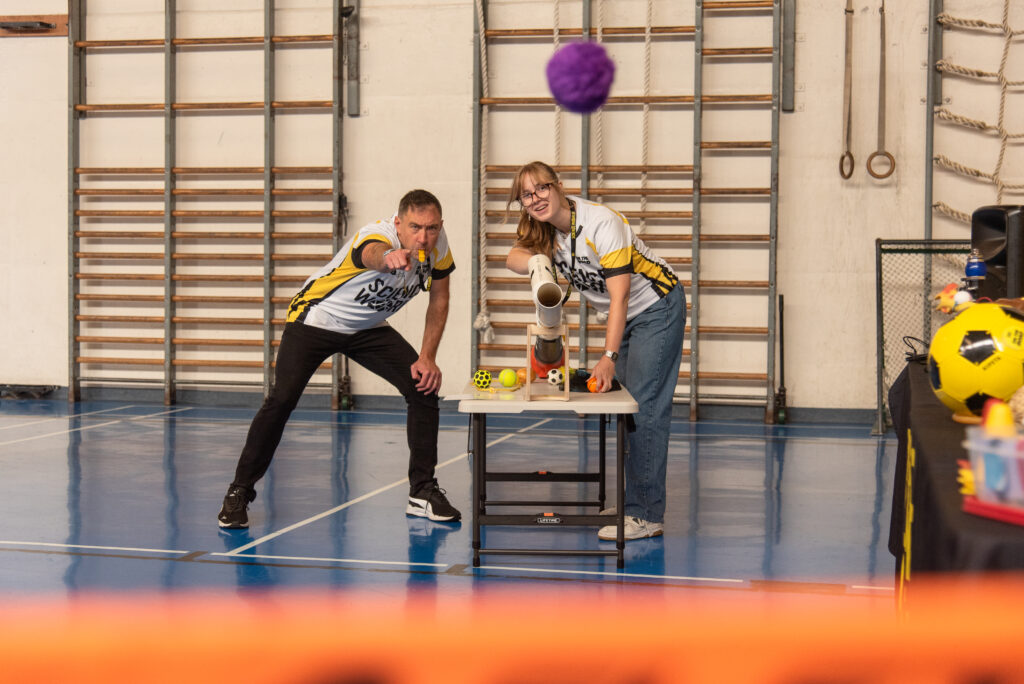
To that end, the new Science of Sport show incorporates new ideas with tried-and-tested classics, all with bit of a FIFA-focused soccer twist. “I felt we needed something to fly around the gym,” says Stefano. “And we've shot many projectiles around many a gym over the years, but we realised a tournament would be an ideal platform for exploration and discovery. So, we gathered a foam ball, tennis ball, birdie, moon ball, crumpled up piece of paper and even a pompom and a potato, and we put them in a tournament together to experiment on their behaviours.
“These are all going to be subject to the same variables, like air resistance, gravity and speed, but they're inevitably all going to behave differently. The next big idea was to get volunteer students to be the coaches and go, ‘OK, you pick your team from these players and let's test it out.’” Using a leaf blower, which ‘player’ makes it into the net on the other side of the gym?
No spoilers here. You’ll have to attend one of our upcoming On The Road shows around the province to find out how the potato ranks. From Abbotsford to Zeballos, our travelling science facilitators bring the fun of STEAM learning to communities across BC who might not otherwise get the chance to visit Science World.
Team STEAM
"STEAM education plays a vital role in shaping future innovators in clean energy," says Nicole Viera, BC Hydro's Manager, Schools & Youth Education. "From water science and turbine engineering to caring for the environment, a strong foundation in STEAM equips youth with the knowledge and skills to help build a more sustainable future. Engaging, interactive shows make these concepts accessible and inspiring, helping youth see how they can help build a world powered by clean energy."
Between September and November, we brought the Science of Sport to 51 schools across the province — from Sooke to Toad River — reaching more than 11,000 students and teachers so far.
Phonebooks and physics
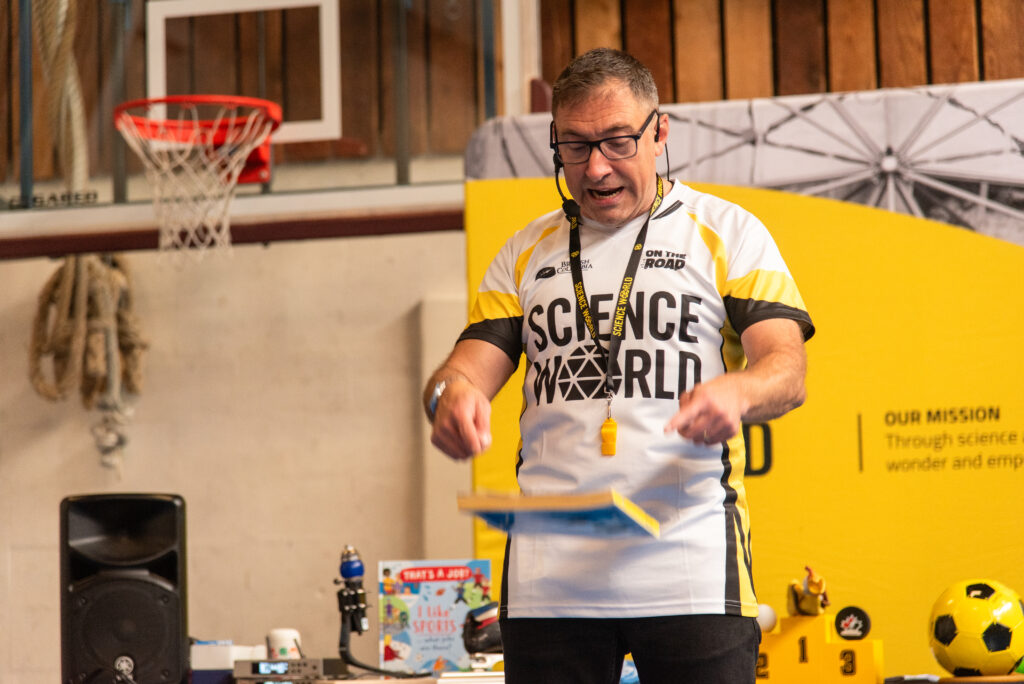
As for that phonebook? It goes back to Galileo's theories often illustrated with a feather and a bowling ball, which explores how they would land at the same time if dropped in no air resistance. “This demo is perfect for sport because it's both a race and also sparks conversation around fair play,” says Stefano. "The two players are the phonebook, and a page which has just been torn out of it, and depending on how we drop them, there are some surprising (and controversial) results, so with the students’ help, we establish rules. So it’s fair play, plus physics, gravity, potential and kinetic energy, all wrapped up in one phonebook.”
Sourcing the key equipment piece was another matter though.
“I went everywhere! I searched Facebook Marketplace, posted a want ad to Craigslist, asked on internal and external channels, and eventually I just went to my mom's house,” laughs Stefano. “I managed to get two phonebooks (still occasionally in use) from ‘Grandma’ and put them into the gear set. So, we have two fresh phonebooks from the 1990s on tour across BC doing science, thanks to donations from our earliest educators — our parents.”
We gratefully acknowledge the support of the Province of British Columbia in bringing this presentation to schools across BC.
